Sunday, 18 May 2014

Dietary Supplements: Potential Benefits and Risks to Athletic Performance

In the world of professional and recreational sport today the prevalence of supplementation in a bid to enhance performance is widespread and estimated to be at between 57-94% of athletes (Ronsen et al. 1999). In one study (Lazie et al. 2009), 75% of the 912 athletes analysed used at least one dietary supplementation product. The most common of those used were multivitamins, taken by over half of the subjects. However, in an eight month study conducted some time before that of Lazie’s it was found that although vitamin and mineral supplementation increased blood vitamin levels, no specific performance benefits were evident (Telford et al. 1992). Many claim their reasoning behind taking multivitamins is as a ‘safety net’ to ensure adequate levels of each micronutrient in the body, however research has shown that if one has a healthy and balanced diet they will already receive plenty of these nutrients (Rodriguez at al. 2009). It should also be stated that in the case of a poor diet with little fresh fruit or vegetables, multivitamin supplements should not replace the role of food, this may give an athlete a false sense of security and lead to detrimental health effects.

Unpublished research from Depiesse revealed the reasons given by athletes for their ingestion of dietary supplements:
  •          To aid recovery from training
  •          Prevent or treat illness
  •          For general health
  •          Performance improvement
  •          Compensate for poor diet


Of course many dietary supplements on the commercial market today do have their evident ergogenic benefits, the first of which can be seen in the various forms of protein supplements such as shakes, bars and snacks. These products are easily accessible for the professional and recreational market alike and provide a convenient means of ensuring that adequate protein is ingested following a bout of exercise. Skeletal muscle synthesis is stimulated through exercise (Biolo et al. 1995) and protein feeding (Rennie et al. 1982), this effect can be enhanced by the consumption of protein following activity to promote a positive net protein balance within the skeletal muscle (Moore et al. 2009). Muscle protein synthesis is specifically maximised by the intake of 20g of high quality protein (Moore et al. 2009), intake below 20g results in sub optimal rates of muscle protein synthesis whereas intake above leads to irreversible amino acid oxidation. However, this is often the case, with many individuals overcompensating their protein intake which only requires the excretion of its nitrogen component. For the active elderly population a higher dose of post exercise protein is beneficial as they are more receptive to protein than younger exercisers. Although there is no metabolic window for this enhancement of muscle protein synthesis, it may be of benefit to eat within half an hour of a workout in order to replenish other physiological stores such as glycogen.

Another popular supplement, especially among strength and power athletes is creatine. Having been proven to improve power, strength and intermittent sprint performance through the stimulation of muscle anabolism following resistance exercise. The net result of which is muscle hypertrophy alongside increases in free creatine and phosphorylcreatine content. With regards to endurance exercise, nitrate supplementation has provided promising and significant results in reducing oxygen consumption during submaximal exercise and the ATP cost of muscular contraction.

Supplementation may also be of benefit to particular populations, especially female athletes involved in endurance sports or on a reduced calorie diet due to participation in aesthetic sports such as gymnastics. Poor nutrition alongside intense training, low body fat and weight loss can blunt oestrogen synthesis by peripheral fat. It is the effect of this, coupled with hormonal alterations that results in exercise related amenorrhea.

Many of these supplements can however result in the unintentional ingestion of banned substances (Geyer et al. 2004) as a result of contamination or poor labelling (Baylis et al). Not only can such an event lead to lifetime ban from sport but also potentially life threatening adverse effects to health.
It has also been observed that herbal supplements such as ginseng, guarna and non-herbal products including zinc and chromium can lead to detrimental health effects.


It is fair to state that the use of dietary supplements is extensive among the sporting population, this is at both a professional and recreational level. However, these individuals should be made aware that few supplements can match there extravagant ergogenic claims and should also never be used to compensate for a poor diet. This also highlights the need for the education of coaches and instructors as it has been found they pose the most influence on an athlete’s dietary habits. Lastly, the risk of obtaining a positive doping test as a result of poor supplement labelling or contamination is very much real and so these risks should be balanced against the potentials benefits before ingestion. 

Tuesday, 25 March 2014

Recovery Strategies: Be your best

Carrying out an intense and heavy training load will inevitably provoke muscle damage that gives way to exercise induced muscle soreness, having a detrimental effect on exercise performance. In between training sessions the primary goal is to bring the athlete into the supercompensation zone (see figure below), once this is achieved the previous regime may be completed with ease. Alternatively, training intensity and volume can be increased to ensure a steady progression of positive adaptation. In order to reach this desired state within the supercompensation theory optimal recovery is key and strategies to obtain this may come in a variety of ways, ranging from supplementation, active recovery, hydrotherapy, cryotherapy and massage. The present article aims to discuss each of these strategies in turn, highlighting their possible benefits to performance and any evident flaws they possess.


Firstly, it is integral to discuss how exercise induced muscle damage (EIMD) occurs and the symptoms it can generate. EIMD is typically characterised as muscular soreness 24-48 hours following a bout of exercise, resulting in reduced muscle functioning and swelling. This damage occurs due to carrying out an unaccustomed amount of exercise with a particularly high eccentric contraction component. As there is little myofilament overlap (see top picture in figure below), muscle sarcomeres become overstretched and damaged. It is this process that causes the membrane damage that allows an intracellular influx of calcium ions and t-tubule disruption. Ca²⁺ entry results in an inflammatory response and so swelling in major muscle groups results, whereas t-tubule disruption leads to a loss of muscular strength as a result of excitation-coupling dysfunction.


Arguably the most common strategy employed by coaches and athletes is the completion of an active recovery. The theory behind this low intensity exercise following training is that it will allow a gradual decrease in core body temperature, whilst also clearing metabolic waste products such as the hydrogen ions associated with lactic acid. One particular study carried out wrist flexion until an intramuscular pH of 6.4 was reached, there after the active recovery group continued flexion at a 5% decrease every minute. Compared with those in the resting control protocol, the intracellular pH of subjects taking part in an active recovery decreased far more rapidly. It can therefore be concluded that an active recovery is an effective strategy to promote recovery from metabolic acidosis and enhances the body’s natural ability to return to a pre exercise state. It is also fundamental that each week to ten days the athlete dedicates one day solely to an active recovery, this can be achieved through a light jog or cross training in a low impact activity such as swimming or cycling. Not only will this prevent overtraining but also break up to monotony of a religious training schedule, therefore sustaining interest and motivation.
With regards to supplementation cherry juice consumption has produced promising results for endurance athletes. Due to its antioxidant properties it can help negate the cellular damaging free radicals that are produced during exercise. Marathon runners consumed either a cherry juice or placebo drink five days before and for 48 hours following a marathon race. Those that ingested cherry juice displayed reduced inflammation/muscular swelling and recovered isometric strength significantly faster than those in the placebo group (Connolly et al. 2006). Branched chain amino acid (BCAA) consumption has also proved to elicit beneficial results, such as no increase in blood markers of muscle damage that can cause inflammatory responses and a lower perceived soreness level (Jackman et al 2010).

The resultant effects of massages are equivocal and their full benefits are not yet fully understood. However, it is through that sports massages can promote circulation, release muscular tension and reduce inflammatory responses. In a group of healthy untrained participants a ten minute massage followed 10X6 bout of maximal isokinetic eccentric actions at the elbow joint. The employment of this massage led to a decrease in the severity of the soreness experienced by subjects compared with no post exercise massage (Zainaddin et al 2005). If you don’t have the time or money for a professional massage self-administered techniques such as foam rolling may also prove effective in alleviating pain and reducing inflammation induced by exercise.

The use of hydrotherapy and cryotherapy has seen substantial increases in recent years, particularly with reference to ice baths. Everyone from tennis players, weight lifters and marathon runners include ice baths within their recovery programme following a heavy training session or competition. The theory behind cold water immersion is that it will promote vasoconstriction in those blood vessels that are beneath the icy water. Blood rich in metabolic waste products is then drained from the legs, allowing fresh oxygenated blood to flush through the limbs once the athlete is removed from the bath. Studies have confirmed that cold water immersion (CWI) and contrast water therapy (CWT) prove effective in reducing the detrimental physiological effects brought about by exercise induced muscle damage. It was found that squat jump performance recovered more rapidly to baseline measures and increases in mid-thigh circumference were reduced following CWI and CWT (Vaile et al. 2008). It is unclear as to the practical recommendations of hot water immersion. Although no significant scientific evidence can confirm its benefits anecdotal reports suggest that added warmth can treat muscular soreness and prepare the muscle for masses/physical activity. However it is important to note that heat should not be added to inflamed muscles as this will only promote further unwanted swelling.

Lastly, sleep is an essential component for optimal recovery. Those athletes who fail to have an adequate amount of sleep will compromise their reaction time, neuromuscular patterns and ability to store muscle and liver glycogen.

Recovery itself is extremely individualistic, no two athletes will recover optimally in identical ways due to training differentiation and personal preferences. The key is finding a recovery tool that works for you as an athlete, whether this reduces the effect of muscular swelling or simply refreshes the major muscle groups in time for the subsequent training bout. However, adequate nutrition, hydration and sleep are vital, regardless of your athletic discipline. The correct recovery strategies can require the same amount of effort and discipline as training itself but by getting its key principles correct injury and illness risks are significantly decreased.


Recovery is where the gains in your training actually occur, and valuing your recovery is the key to both short-term and long-term success” – Sage Rountree, Team USA Triathlon World Championship team member and ultrarunning coach.

Wednesday, 12 March 2014

Exercise Euphoria: The runner’s high

Many avid runners will already know what I mean by the “Runner’s High” and the feelings that it provokes, often it is completely unanticipated yet feels as though it’s the most natural feeling in the world. Frequently when on longer training runs that are up to six to ten miles in length, I have slipped into the running high, finding myself in another world for between one and two miles. The run seems effortless, I’m almost gliding with every pace and a sense of fulfilment encapsulates me. One definition from Sach and Berger states the runner’s high is a “euphoric sensation experienced during running, usually unexpected, in which the runner feels a heightened sense of wellbeing, enhanced appreciation of nature and a transcendence of time and space”.

It has been reported that among runners who have previously experienced the high up to 30% of those encounter it on their daily runs, claiming to feel a sense of mental awareness, liberation, exhilaration and pain suppression. Additionally, in an interview of 60 runners it was revealed that the high brought about by running cannot be reliably predicted but can be facilitated by the absence of distraction and cool weather conditions. Runs should be ≥6 miles in length at a comfortable pace and it is also vital there is no concern with regards to timing or pacing.

Several theories exist regarding how the running high is brought about with perhaps the most famous being that of endorphin release, the body’s natural painkiller. However this theory has several problems, fundamentally endorphins are simply too large to pass over the blood-brain barrier. Consequently, although endorphin concentrations do increase within the circulation during exercise, without reaching the brain they cannot be held accountable for the high exercisers experience. Another key hypothesis is that of the opioid system, opioids are psychoactive chemicals that resemble morphine in their pharmaceutical effects. Research has revealed that release of endogenous opioids occurs following prolonged exercise and that this release is closely correlated with perceived euphoria among runners. However, it is also known that the opioid system is accountable for responses such as respiratory depression and other effects that are detrimental to running performance.

Perhaps the most feasible alternative to the endorphin theory is the ‘endocannabinoid hypothesis’’. Cannabinoids, an active ingredient found in marijuana binds with the nervous system to reduce pain and aniexty, producing a profound sense of wellbeing. Our body has the ability to create its own cannabinoids (endocannabinoids), these are composed of lipid molecules small enough to pass over the blood-brain barrier to provoke an affect in the brain. Research findings have shown that exercise increases the concentrations of these endocannabinoids, producing psychological effects closely resembling those associated with the runner’s high. The endocannabinoid systems activation is also thought to elicit a reduction in attentional span, time estimation difficulties, memory impairment and a sense of wellbeing. All of which characteristics are often included in the reported psychological profiles of long distance runners. These findings may be as a consequence of decreased metabolism in the prefrontal regions of the brain with increased endocannabinoid concentrations, whilst also demonstrating disadvantageous affects to cognitive functioning.

As yet there is no reference to a cyclist’s or swimmer’s high, it is likely this is due to endocannabinoid receptors residing in the skin and so as runner’s make contact with ground endocannabinoid release is stimulated. Another key point worth noting is that low level skills such as running are highly controlled by the basal ganglia which are responsible for cognition and habitual behaviours. The net result of this is that they more readily activate the endocannabinoid system than high skilled activities such as hockey or basketball.
Furthermore, endocannabinoids interaction with the neurotransmitter dopamine suggest that they play a role in the brain’s rewarding system, possibly contributing to exercise/running addiction. This many result in detrimental health affects among athletes who continue to train despite a chronic overuse injury. Lastly, it has be observed that the endocannabinoid system also attributes peripheral effects including bronchodilation and vasodilation. Such physiological changes can facilitate endurance performance by allowing for more efficient oxygen transportation, thereby promoting feelings of ease and effortlessness.

This article intended to provide an overview of the “Runner’s High” phenomenon, there is still much room for further research however it is clear that endurance runners frequently encounter many of the mood components mentioned whilst training. The most promising theory is that of endocannabinoids, providing both a physiological and psychological explanation for the exercise high. Although these feelings are subject to great individual variation and it is still unclear how age, sex and exercise intensity can affect the feeling of exercise euphoria.

"I always loved running... it was something you could do by yourself, and under your own power. You could go in any direction, fast or slow as you wanted, fighting the wind if you felt like it, seeking out new sights just on the strength of your feet and the courage of your lungs." - Paula Radcliffe

Tuesday, 4 March 2014

The myths and mysteries of optimal dietary protein intake

It has been a long posed question as to whether elite and recreation athletes alike require an increase amount of protein within their diets in order to optimise training gains. This article will discuss the need for protein within an athletic diet, its optimal dosage, and overall guidelines that can be applied to an individualized nutritional programme.

We know that the average individual contains approximately 12kg protein, much of this is contractile skeletal muscle and the remainder resides as free amino acids found either in the circulation or intracellularly within muscle fibres. A continual bodily protein turnover shows that humans require a regular and adequate level of protein intake in order to carry out basic biological functioning and that this level of intake is somewhat increased for active individuals. Such a consensus was reached due to an observed increased in leucine oxidation during exercise, as well as multiple studies showing greater protein intake results in an improved muscle mass and muscular strength.

It is also clear that exercise causes increases in muscle protein synthesis alongside muscle protein breakdown, however exercise alone does not result in a positive net muscle protein balance. It is essential exercise is coupled with amino acid ingestion, as this will stimulate muscle protein synthesis and inhibit exercise induced protein down. This way muscle mass will gradually increase (hypertrophy). At the other end of the spectrum, inactivity will lead to an inhibition of protein synthesis and actually stimulate the breakdown of proteins, resulting in a net loss of muscle mass (atrophy) and decreased muscular strength. Although it has been shown that just a minimal amount of resistance training can prevent the inhibition of protein synthesis, this is of greater importance during periods of recovery or injury when muscle wastage is most likely to occur.

Now to perhaps the key question; how much protein do athletes  actually need to consume? Firstly, it should be noted that specific recommendations are extremely difficult to determine due to the variation in parameters such as age, sex, sport, playing position and the individuals training status. However, ingesting 20 grams of egg or whey protein can be said to be the general guideline of consumption to maximise the anabolic response of the muscles to exercise. There is little need to consume more than 20 grams of protein following a bout of physical activity, since the body is unable to utilise further amounts and so it will be either oxidised or excreted. No metabolic window exists for this consumption, as muscle protein synthesis experiences no change whether intake occurs immediately following training or three hours later. Although eating immediately after exercise is necessary to optimise recovery with regards to other substances such as glycogen.

Depending on the nature of one's nutritional goals some individuals may benefit from excess protein intake.  This is true of those with a primary aim of gaining lean mass and muscular strength where carbohydrate intake is not an concern. It may also be of benefit to those on a hypocaloric diet for weight loss, as a high protein diet will prevent the loss of lean tissue. The main concern here resides with the notion that excessive protein consumption may compromise the intake of other macronutrients such as carbohydrate.

Another key argument with regards to protein is whether there is a real need for its supplementation. It has been shown that training actually increases protein balance, which allows for enhanced reutilization of amino acids and thus reduces intake requirements. Therefore more ample amounts of protein are consumed in the diet and so there is little need for supplements. Despite this many do still seek further means of protein intake, with whey being a very popular choice. Compared to other supplements such as casein or soy, whey protein stimulates a superior anabolic response of muscle protein synthesis. This is because it contains greater amounts of leucine, an important essential amino acid.

With reference to the possible dangers of a high protein intake, evidence is at best equivocal that it will lead to negative health effects. Kidney problems and bone loss in healthy individuals are almost uncertain, let alone those who are physically active. It is however important that an increased amino acids intake does not override that of other essential nutrients.

When applying the contents of this article to your own nutritional programme the following guidelines may be followed; although it is probably not necessary whey protein is the best supplement option. 20 grams of protein is sufficient to stimulate optimal muscle protein synthesis following exercise and can increase strength by 40-50%. However this should only be used as a general figure and individually tailored with regards to age, sex, sport and training status.


Sunday, 23 February 2014

Overtraining and Performance Deterioration: Knowing when to take a rest day

It is universally agreed by sport and fitness professionals that overtraining is a necessary requirement in order to achieve the relevant physiological adaptations for peak performance. However, when prescribed in inappropriate quantities a deterioration in performance can be provoked. This article considers the impact of overtraining on the psychological and athletic state of an individual, highlighting the importance of various themes presented in my previous blogs.

Overtraining can be defined as a cycle of training whereby the athlete is exposed to excessive maximal capacity training loads. If this training cycle proceeds without adequate rest, a reduction in workload or in conjunction with psychological/physical stressors then overtraining syndrome (OTS) results and subsequently a deteriorated performance is seen.

At present there is no single test that can be utilized to diagnose overtraining, its recognition requires the identification of a number of stress markers which remain elevated despite a period of recovery. Stressors that may be observed include:
  •          Diminished skeletal muscle glycogen stores
  •          Aerobic efficiency deterioration
  •          Suppressed immune system
  •          Depression
  •          Distorted sleeping pattern

These parameters should be regularly screened for alteration by sport professionals, this will ensure that the short term fatigue related with overload is not confused with the chronic fatigue generated by overtraining.
Numerous studies have taken place to review the effects of overtraining on physiological and psychological functioning, one of which observed that mood state disturbances increase in a dose-response fashion to the training stimulus. These fail to return back to baseline levels even after a significant reduction in training load. It has also been reported that 80% of ‘stale’/overtrained athletes are clinically depressed, substantially affecting other aspects of an individual’s life and overall wellbeing. Alternative research has also shown that 60% of female and 64% of male elite long distance runners have experienced at least one bout of staleness within their running careers, whereas this fell to 30% in highly trained sub elite runners (Morgan, O Connor, Ellickson and Bradley 1988). It is also thought that once staleness is experienced subsequent episodes are more probable, thus emphasising the need for the observation of stress markers in athletic populations. Failure to identify key characteristics may lead to premature retirement from sport, increased injury risk or greater susceptibility to illness.   

It has been argued that a high training volume coupled with insufficient rest will produce muscle, skeletal and/or joint trauma. Such trauma will result in the activation of circulating monocytes by injury related cytokines that produce systemic inflammation, this inflammatory response can trigger the symptoms of diseases such as stroke, heart attack and arthritis. The elevation of cytokines within the circulation also directs a response known as ‘sickness behaviour’, which by means of the central nervous system stimulates negative mood and behavioural changes. In addition, liver function is adjusted to support greater gluconeogenesis (the generation of glucose) alongside de novo synthesis of various proteins and it is this hypercatabolic state that results in muscle wastage. Theoretically meaning that the body’s primary focus is upon survival/recovery, as oppose to the adaptation that training aims to elicit. With regard to immune function, a decrease in glutamine concentration contributes to immunosuppression as it acts as a key fuel for immune system cells.  

As a result of these biological responses it is common for overtrained athletes to present a deteriorated mood state, typically complaining of sleeping disorders, lack of motivation and ‘heavy legs’. An impaired anaerobic performance and lactic acid threshold has also been observed, causing a reduction in the time to exhaustion during high intensity endurance exercise.  


For the prevention of this decline in performance it is essential that training is periodised and tailored to match the Profile of Mood States (stress levels) of the athlete, as well as tapering training prior to competition. These practices should be coupled with adequate carbohydrate ingestion to fuel and recover from physical activity, ensuring the maximum amount of energy is available for exercise. It is also vital the training is abstained from following periods of illness, high stress and extreme environmental conditions for the maintenance of motivation. 


With professional and amateur sporting calendars now including events all year round it is fundamental that athletes of all abilities allow for adequate rest within their regimes. Research clearly documents profound affects to physical and psychological health if individuals fail to do so, these may ultimately lead to severe injury, depression or performance decline. 

Friday, 14 February 2014

The Taper: Physiological Peaking and Optimal Athletic Performance

It is common practice for elite and recreational athletes to spend months, perhaps even years training in preparation for a specific sporting event. However, the physiological and arguably the psychological gains achieved by an intense training regime are useless if the exerciser does not conduct an effective taper.

The first article of this month discussed the importance of a long term training programme, the current article will serve well to complement the previous issues raised and ensure even more refined physiological peaks are achieved. The taper is a fundamental element to sporting preparation and can be characterised as a mesocycle, within which the training stimulus sees a significant reduction. This may be achieved in a linear or nonlinear fashion. The aim of this practice is to minimise any fatigue accumulated during prior training, whilst preventing the loss of relevant biological adaptations. Therefore highlighting the need to maintain training but at a reduced level.

The taper should be exclusively tailored to an individual’s preferences, as any reduction in training will also cause profound psychological effects to occur. Such psychological stressors are due to the absence of a structured lifestyle and increased time to over think performance, both of which account for a greater pre-competition anxiety level that can be detrimental to performance.

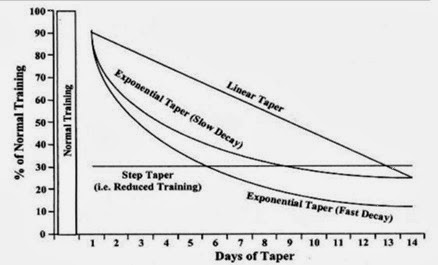
There are distinct patterns to tapering, these include a step taper, linear taper or exponential taper which involves a fast or slow decay of the training stimulus. During a step taper a sudden, standardised reduction in training can be observed and lasts for the full taper length. Alternatively, a more gradual decline in the training load can be seen in a progressive linear taper. Lastly, an exponential taper may be implemented, whereby a fast constant of decay elicits a rapid reduction in training load. On the other hand, a slow decay allows for a gradual training load reduction. The graph below displays these taper variations and the training load reduction one can expect to observe throughout its duration.


Current research indicates that a fast decay taper may enhance athletic performance better than a slow decay, as this provides the athlete with more time to overcome accumulated fatigue from the final weeks of an intensive training regime. It is also thought that an advanced reduction to training followed by a subsequent increase could further optimise performance. The reasoning behind this practice is that the athlete would be able to take advantage of a reduction in fatigue, effectively responding to training carried out during the taper.

The effects one can expect from an effective taper include –
  •         Hypervolemia, this is an increase in blood plasma albumin content which provides the mechanism to metabolise greater amounts of fat.
  •         An increase in red blood cell production, meaning oxygen carrying capacity is greater and improvements to VO₂ max can be expected.
  •         Restoration of skeletal muscle and liver glycogen reserves, this is particularly prominent when coupled with appropriate nutritional techniques such as carbohydrate loading.
  •         A decrease in total mood disturbance.
  •         Increased muscular strength due to a greater maximum shortening velocity.

As a result of the physiological benefits brought about by an effective taper, the mean expected improvement to performance time is approximately 3% (Mujika and Padilla, 2003). This may seem like a fairly modest enhancement, however it could reduce one’s half marathon time from 1:30 to 1:27, decreasing the average running pace per mile from 6:52 down to 6:38.


Finally, in order to achieve an effective taper a reduction in training volume should be seen for a duration of two weeks, the intensity and frequency of this training should be maintained to at least 80% of the pre-taper levels. This ensures the quality of training is not compromised but sufficient recovery time can still occur. A fast decay, nonlinear taper design will also mean no negative psychological responses occur that have often been associated with step designs.  

Thursday, 6 February 2014

A Sports Training Phenomenon: The Relevance and Versatility of High Intensity Interval Training (HIIT)

 It is well known in the world of sport and exercise that regular participation in endurance training causes improvements to performance in activities that rely mainly on aerobic metabolism. This is largely due to adaptations that allow for greater oxygen transportation and the subsequent utilization of the more efficient energy fuel, fat. On the other hand, high intensity anaerobic training is generally perceived to have less of an impact upon aerobic capacity and oxidative energy metabolism. However, various publications have shown that regular involvement in high intensity interval training (HIIT) for at least 6 weeks can increase VO₂ max and endurance capacity. Much of the recently published evidence also suggests that these biological adaptations associated with aerobic performance enhancement can be obtained more rapidly via HIIT. The current article will present the recent findings regarding speed endurance/high intensity interval training and discuss its relevance for aerobic performance enhancement.

High intensity interval training can be defined as repeated bouts of high intensity exercise (≥90% VO₂ max) lasting between a few seconds and a few minutes, interspersed with relatively longer periods of rest or low intensity active recovery. The length and nature of this recovery period is very much dependant on the athletes training aims.

Several studies have been carried out to investigate the effects of a HIIT regime; one remarkable finding by Burgomaster et al. (2005) was that despite a dramatic reduction in training volume, vast improvements to aerobic performance were seen when eliciting a high intensity protocol. They found subjects could maintain a fixed submaximal work rate for double the length of time (from 26 to 51 minutes, cycling at 80% of pretraining VO₂ max). These results were achieved after just six HIIT workouts, whilst the control group displayed no alteration in performance.
In another study, conducted by Gibala (2006) the experimental subjects performed a generic HIIT protocol whilst the control group carried out six continuous cycling sessions (65% VO₂ max, 90-120 minutes∙d⁻¹). The total training time completed by each group was 2.5 and 10.5 hours respectively, meaning that the HIIT training group saw a 90% reduction in training volume. Although significantly different in almost every sense of the FITT principles(frequency, intensity, time and type), the two protocols attained virtually identical physiological alterations.

Such a markedly improved aerobic performance can be accounted for by the following biological and metabolic changes:
  •       Increased resting glycogen content in the skeletal muscle and liver which can be utilized as an energy fuel.
  •          A greater total number of muscle glucose transporters, enabling more metabolic fuel to enter the blood and reach active muscles.
  •          Increased density of muscle capillarization, providing the network to transport oxygen and nutrients such as liver glycogen to the working muscles. This also allows for the removal of the fatiguing waste product H⁺ ions, associated with lactic acid and a lowered intramuscular pH that leads to a decline in muscle contraction strength.
  •          Speed endurance not only increases the presence of glycolytic enzymes involved in anaerobic metabolism, but also causes greater concentrations of beta oxidation enzymes (citrate synthase and cytochrome oxidase). These are responsible for the metabolization  of fat , thus sparing the body's limited glycogen stores and reducing lactate production.
  •          There is an increase in the amount of potassium ions pumped back into the cell, limiting its accumulation in the interstitial fluid and therefore delaying progressive membrane depolarisation. This serves to maintain action potential amplitude - consequently delaying the onset of fatigue.
  •          Increased  VO₂ max, enabling a greater aerobic endurance performance.
  •          Finally, a greater  buffering capacity of lactate has been observed due to HIIT. More H⁺ transporters means that vast amounts of lactic acid's associated H⁺ ions are able to leave the muscle and move into the blood. Here they combine with bicarbonate to give carbonic acid. When carbonic acid dissociates its products of carbon dioxide and water can simply be exhaled, causing no negative effects to athletic performance.

These adaptations have significant implications in enhancing endurance performance. Firstly, running economy has been seen to gain considerable improvement, this means less energy is required to run at the same velocity. Furthering this point, a decreased energy requirement will allow for the already increased glycogen reserves to be maintained even longer. In addition, faster VO₂ kinetics at the onset of physical activity enables oxygen to be utilized faster for aerobic metabolism. As a result there is less break down of the body's anaerobic reserves and a reduction in metabolite (lactate) accumulation.

To conclude, it is the practical applications of HIIT that are of primary concern to elite athletes and recreational exercisers. It is known that highly endurance trained athletes find it increasingly difficult to achieve further biological adaptations through continuous endurance training alone. However, it has been observed that HIIT can improve endurance performance in already trained aerobic performers by increasing  their VO₂ max and running economy. Furthermore, implementation of this efficient training method will allow for more time to be spent on technical/tactical skills training.

On the level of recreational exercise participation and exercise prescription the most common barrier to physical activity is a lack of time, with many adults even failing to meet the minimum exercise guidelines. The innovations of HIIT could significantly contribute to combating this problem as identical adaptations from prolonged endurance training are obtained in a third of the time.

"I do it as a therapy. I do it as something to keep me alive. We all need a little discipline. Exercise is my discipline" - Jack LaLanne